SpaceX asks Cochise County to keep its Dec. 9 data center hearing, says it owns the applicant
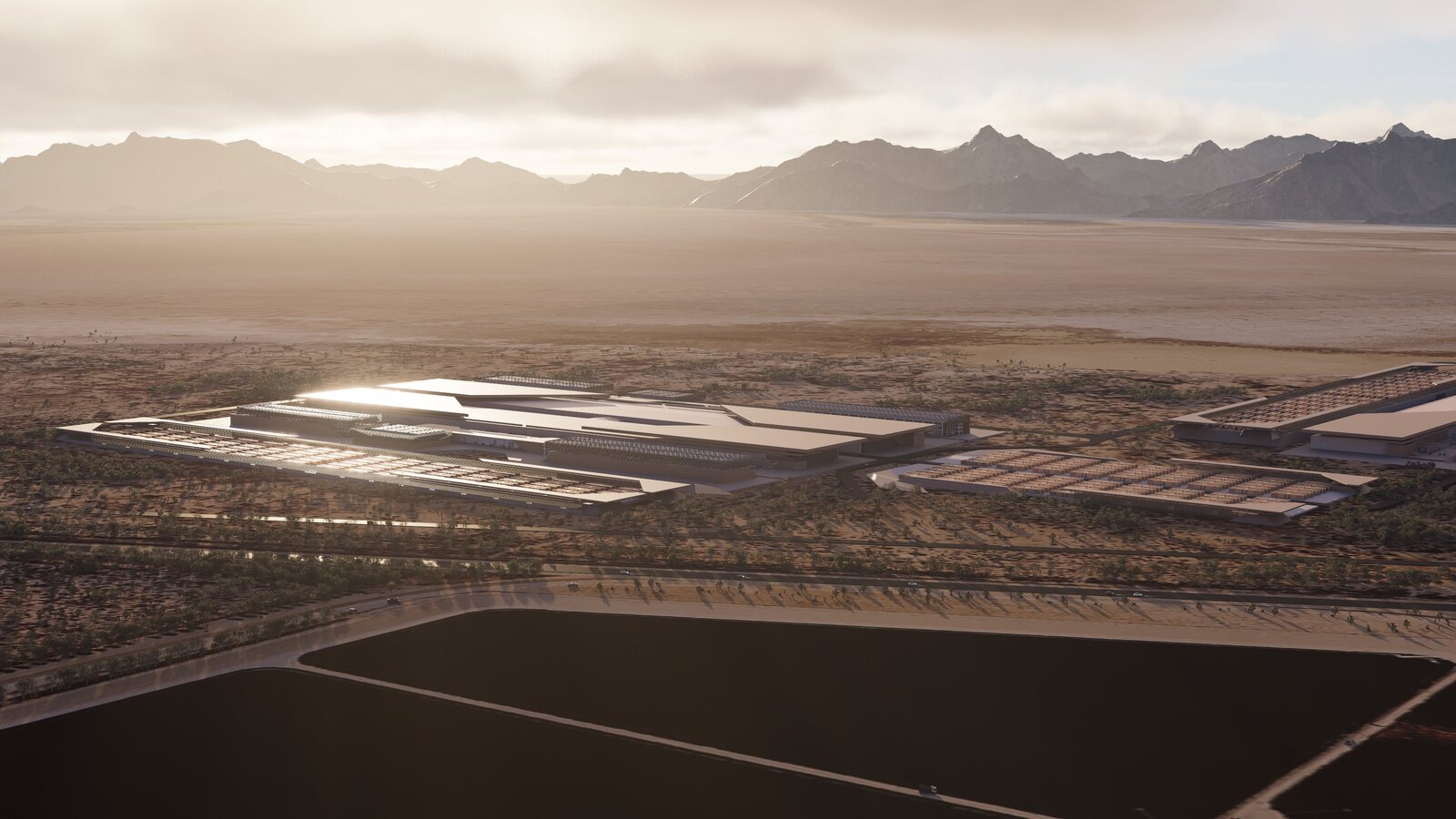
COCHISE COUNTY, Ariz. — SpaceX has asked Cochise County's Planning and Zoning Commission to go ahead with its Dec. 9 hearing on the company's proposed data center near Willcox. Its letter to the commission answers Arizona Attorney General Kris Mayes, who asked the commission last week to put off its vote until state and federal reviews are done.
The seven-page letter, dated Nov. 24 and signed by Sheila McCorkle, SpaceX's vice president for Starship legal, asks the commission to "keep the December 9 public hearing on the calendar and consider SU26-22 on its merits." SpaceX posted the letter on its project website and pointed to it Wednesday morning in a post on X: "We're asking the Commission to keep it and let residents be heard."
The letter also says plainly what the county application does not. "The applicant of record, Tombstone Resources LLC, is a wholly owned subsidiary of SpaceX," it says. "SpaceX will build, own and operate the campus." SpaceX's name does not appear in the application, which Tombstone Resources filed.
Why SpaceX says waiting won't help
The commission's vote decides whether, where and on what conditions the campus can be built, the letter says, but it does not turn on the power. Other approvals come later, each from its own agency:
- Power. The campus can't get retail electric service until the Arizona Corporation Commission approves the service agreement among SpaceX's subsidiary, Sulphur Springs Valley Electric Cooperative (SSVEC) and Arizona Electric Power Cooperative (AEPCO).
- Land clearing. No clearing or grading until the county issues a land-clearing permit, accepts a drainage report and issues any required floodplain permit, the Arizona Department of Transportation permits the construction entrance on U.S. 191, and the state environmental agency's dust and stormwater approvals are in place.
- Buildings. None can go up until the county issues building permits.
"Delaying the hearing would not produce them sooner; it would only push them later," the letter says.
What SpaceX is offering instead
In place of a delay, SpaceX says it would accept conditions on the permit:
- Emergency planning. It accepts, at its own expense, all six recommendations the county's Local Emergency Planning Committee adopted on Nov. 12, including a hazard-specific emergency plan, a fire-protection agreement with a nearby fire district and training for local responders.
- Traffic. It will pay for an independent review of its traffic study and work with the state transportation department and the county on road improvements and when each must be in place.
- Water. It supports making its water commitments enforceable for the life of the campus, including how compliance would be checked.
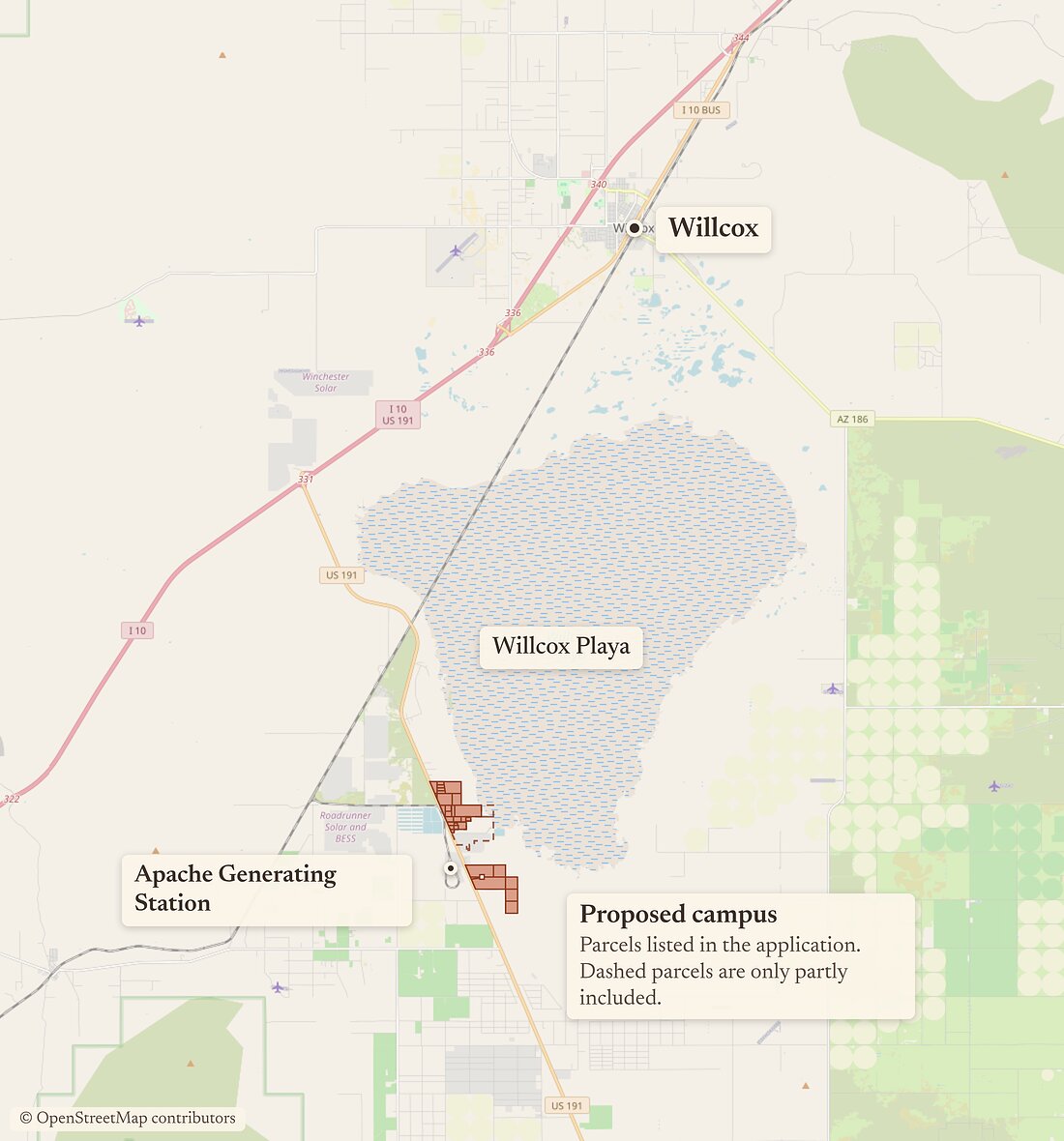
- Fort Huachuca. It will consult the Army post and its Electronic Proving Ground, which tests equipment at the Willcox Playa, and address any written concerns before the first building permit.
For those conditions, the letter points readers to "Section 8," but Section 8 of the posted letter is about jobs. The version on SpaceX's website is labeled "letter only." Tucson Daily Brief has asked SpaceX for clarification.
On power supply, the letter says the Apache Generating Station next door is not directly contracted to serve the campus. SpaceX and AEPCO would buy wholesale power from across the Western power grid, it says, and the cooperatives would decide when the system is ready to serve each phase. Under the proposed power agreement, SpaceX would pay for its electricity, prepay the grid upgrades needed to serve the campus and post financial security before it receives power, which the letter says will keep existing customers from subsidizing the project.
SpaceX also says it will keep meeting with residents, including in Willcox. It says it mailed postcards about the project to nearly 51,000 addresses in the county on Nov. 23.
What SpaceX says, and what the record shows
SpaceX's X post repeated several of the project's main claims. Here is how they compare with the application and the cooperative's letter in it.
- "no gas plant": SpaceX isn't asking to build a gas-fired power plant. The campus would run on power from the grid. It would have natural-gas backup generators, about 10 megawatts for each computing building, for outages and testing.
- "no industrial water use": The application estimates 7 to 10 acre-feet of water a year, mostly for drinking water and restrooms. That figure doesn't include a one-time 3 million to 6 million gallons to fill the cooling loops, water for construction, or the water used to generate the campus's electricity.
- "residential rates for SSVEC customers may decrease by up to 40%": The application puts the possible decrease at 10% to 40%. SSVEC's own letter in the application says those benefits depend on agreements still being negotiated and on state approval, and that the benefits "are not guaranteed."
- "$3.6B to upgrade the grid": The application puts the grid upgrades at about $3.6 billion over four phases, about $0.5 billion of it in the first, paid for by SpaceX and owned by the cooperatives.
- "1,000 local permanent jobs and up to 5,500 construction jobs": The application estimates about 1,000 permanent jobs at full build-out, including on-site contractors, and about 5,500 construction workers at the peak.
- "$50B+" investment. That is SpaceX's figure. The application doesn't give a total.
The attorney general's response
Asked about SpaceX's letter, Mayes' chief of staff, Richie Taylor, wrote Wednesday that the office is "continuing to review this latest communication ahead of the AG's town hall in Cochise County." Taylor said SpaceX "has also reached out to request a meeting with our office," and that the office "will be seeking additional information from the company to inform the public's understanding of the project."
"But there remain unanswered questions related to this project even with this additional communication from SpaceX to the County," Taylor wrote.
The office's main question is power. "Six gigawatts is equivalent to the demand of the entire Phoenix metro area on a mild winter day," Taylor wrote. According to Taylor, SpaceX plans to import power over the interstate transmission system, but "that system has constraints and bottlenecks as it is," and the office "has not identified sufficient available transmission capacity to meet SpaceX's initial 1.5 gigawatts of demand – let alone 6.0 gigawatts." SpaceX should clarify its power supply plans, Taylor wrote, "including how it will address constraints and competing demand for transmission capacity running through Cochise County."
Taylor did not say whether Mayes still wants the commission to delay its vote.
What's next
- Fri., Nov. 27, noon: deadline for written comments to be included in the hearing packet.
- Thu., Dec. 3, 5:30 p.m.: Mayes hosts a town hall on the project at Cochise Elementary School.
- Wed., Dec. 9, 2 p.m.: the Planning and Zoning Commission's public hearing in Bisbee. The commission's decision is final unless it's appealed to the Board of Supervisors.
On Tuesday, county supervisors voted 3-0 to send Mayes their own letter answering hers.
In an email Wednesday, SpaceX pointed Tucson Daily Brief to its X post and letter. It did not answer questions about the "Section 8" conditions, when the power agreement will be filed, or others sent earlier this month.
Updated Nov. 25, 2026, 1:34 p.m.: added the attorney general's office's response to SpaceX's letter.
This report was drafted by Claude Opus 5.5 from SpaceX's Nov. 24 letter to the Cochise County Planning and Zoning Commission, its Nov. 25 post on X and Cochise County records, then reviewed and edited by Nicholas De Leon with Claude Opus 5.5, and published at 1:10 PM MST on November 25, 2026. Read more about how this is made.
Comments
Join the conversation on Bluesky